.png)
.png)




.png)
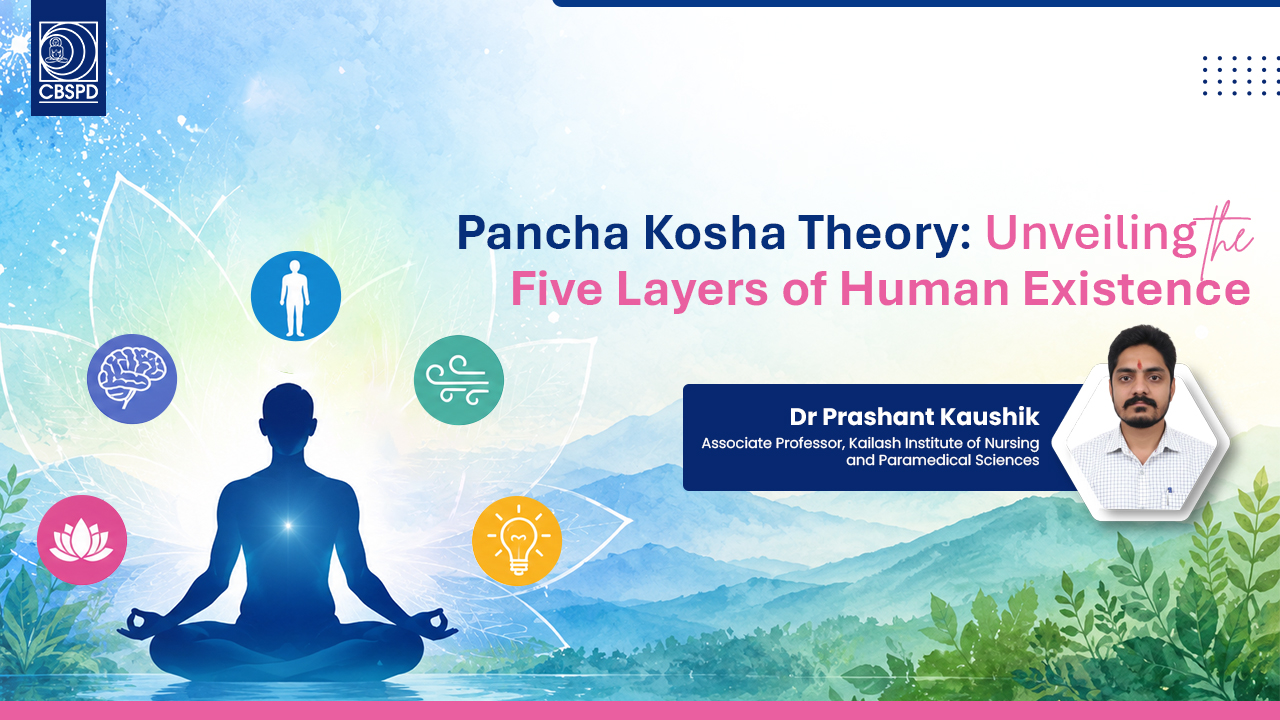
Pancha Kosha Theory: Unveiling the Five Layers of Human Existence

Dr. Prashant Kaushik,
BPT, MPT (Sports), PhD
Associate Professor, Kailash Institute of Nursing and Paramedical Sciences
Introduction
In the modern-day, rapid-paced world, fitness is seen in terms of physical health or the absence of sickness. However, the historical Indian system of Yoga gives a far broader and deeper understanding of human health. In keeping with yogic philosophy, a human is not simply a physical body but a multidimensional entity including 5 interconnected layers called Pancha Koshas. The phrase 'Pancha means "five," and 'Kosha' means "sheath," "masking," or "layer."
The Pancha Kosha principle is defined inside the Taittiriya Upanishad, one of the most important Upanishads of Vedic literature. It explains that the true Self (Atman) is covered by 5 sheaths that constitute special elements of human life. These sheaths include the physical body, life energy, thoughts, intellect, and bliss. Together, they affect a person's physical fitness, emotional balance, mental clarity, intellect, and spiritual depth.
The theory serves as the philosophical foundation of yoga and holistic healthcare. It emphasizes that authentic health can be attained when all five sheaths are balanced and functioning harmoniously. Healthcare experts, physiotherapists, yoga therapists, psychologists, and well-being professionals are increasingly recognizing the importance of this holistic technique.
Understanding The Pancha Kosha Theory
According to yogic philosophy, the human body resembles an onion with several layers, the outermost layer being the physical body, and the innermost layer being the blissful state nearest to the true self. Each kosha influences the others, such that an imbalance in one sheath impacts all the other layers.
The five koshas are:
• Annamaya Kosha (Physical Sheath).
• Pranamaya Kosha (Vital Energy Sheath).
• Manomaya Kosha (Mental Sheath).
• Vijnanamaya Kosha (Intellectual Sheath).
• Anandamaya Kosha (Bliss Sheath).
The goal of yoga is to purify, strengthen, and harmonize these sheaths, enabling individuals to experience optimal health and ultimately realize their true spiritual nature.
1. Annamaya Kosha (Physical Sheath):
The Annamaya Kosha is the outermost and most visible layer of human life. The Sanskrit phrase 'Anna way' (meals) indicates that this sheath is nourished and sustained by healthy meals. Everything within the physical frame- the bones, muscles, tissues, pores and the skin, organs, blood, and the connective tissues, is a part of the Annamaya Kosha. Since this sheath is maintained by food and death returns it back to the nature, its maintenance requires right nutrition and lifestyle. A balanced diet, good hydration, a regular exercise regime, quality sleep, and hygiene are critical determinants of its health.
Yoga emphasizes the importance of Asanas (physical postures) to enhance flexibility, muscular power, posture, circulation, and standard bodily fitness. A regular practice of yoga additionally reduces the risk of lifestyle diseases including weight problems, hypertension, diabetes, musculoskeletal problems, and several others.
A healthy Annamaya Kosha is a solid foundation upon which the final koshas can function efficiently.
2. Pranamaya Kosha (Vital Energy Sheath)
The Pranamaya Kosha represents the body's life force or vital energy, called ‘Prana’. While the physical body can be compared to a machine, prana is the energy that keeps this machine functioning. Without prana, life cannot exist.
Prana flows throughout the body through subtle energy channels called Nadis and energy centers known as Chakras. Proper circulation of prana maintains respiration, blood circulation, digestion, metabolism, body temperature, and cellular activities.
According to yogic physiology, the Pranamaya Kosha functions through five major Pranas:
• Prana Vayu: Controls breathing and heart function.
• Apana Vayu: Governs elimination of urine, stool, and reproductive functions.
• Samana Vayu: Responsible for digestion and nutrient absorption.
• Udana Vayu: Controls speech, memory, and upward movements.
• Vyana Vayu: Regulates circulation and movement throughout the body.
Imbalance in the Pranamaya Kosha may lead to fatigue, breathlessness, poor immunity, digestive disturbances, stress, and reduced vitality.
Yoga recommends Pranayama, breathing exercises, meditation, relaxation techniques, exposure to fresh air, and healthy lifestyle habits to strengthen this sheath. Practices such as Anuloma Vilom, Bhramari, Kapala-bhati, and Nadi-Shodhana help improve oxygenation, lung function, and mental calmness while balancing the body's energy system.
3. Manomaya Kosha (Mental Sheath)
The Manomaya Kosha is the sheath of the mind and emotions. It governs the mind, the emotions, desires, imagination, reminiscence, and sensory belief. Each experience obtained through the 5 sense organs is processed within this kosha.
Modern lifestyles expose people to numerous stressors, including stress borne out of education, workplace needs, economic concerns, and social expectations. These challenges disturb the Manomaya Kosha, resulting in tension, despair, worry, anger, frustration, irritability, insomnia, and emotional instability.
The mind significantly influences the bodily fitness. Negative emotions prompt straining of hormones, increase blood pressure, weaken immunity, and contribute to persistent illnesses. Positive feelings, on the other hand, promote recuperation, resilience, and emotional balance.
Yoga offers several methods to purify the Manomaya Kosha, including:
• Meditation.
• Mindfulness practices.
• Yoga Nidra.
• Mantra Chanting.
• Prayer.
• Relaxation Techniques.
• Positive Affirmations.
4. Vijnanamaya Kosha (The Intellectual Sheath)
The Vijnanamaya Kosha represents the higher intellect, information, discrimination, moral values, and self-recognition. Unlike the Manomaya Kosha, which reacts emotionally, the Vijnanamaya Kosha evaluates situations rationally and makes knowledgeable selections.
This sheath allows human beings to distinguish between right and wrong, truth and falsehood, useful and dangerous actions. It helps vital questioning, moral judgment, creativity, learning, and problem-fixing.
A strong vijnanamaya Kosha helps individuals:
· Develop self-discipline.
· Control Impulses.
· Make ethical Decisions.
· Improve Concentration.
· Set Meaningful Goals.
· Lead a purposeful Life.
Weakness in this sheath leads to confusion, poor judgement, impulsive behavior, lack of direction, and unhealthy lifestyle choices.
The Vijnanamaya Kosha can be strengthened through:
· Self-Study (Svadhyaya).
· Reading Inspirational Literature.
· Reflective thinking.
· Higher Education.
· Guidance from experienced teachers.
· Meditation and contemplation.
In yoga philosophy, developing wisdom is considered essential for spiritual progress because it helps remove ignorance and attachment.
5. Anandamaya Kosha
The Anandamaya Kosha is the innermost and subtlest sheath. The Sanskrit phrase 'Ananda' means "bliss". This kosha represents inner peace, unconditional joy, spiritual success, and closeness to the authentic Self.
Unlike pride, which depends on external objects, bliss is independent of material possessions or worldly achievements. It arises naturally when the thoughts become calm and loose from desires, fear, and attachment.
People occasionally experience glimpses of the Anandamaya Kosha during deep meditation, profound prayer, selfless service, or moments of internal silence.
Practices that help awaken this sheath include:
•Deep Meditation.
•Bhakti Yoga (devotion).
•Karma Yoga (selfless service).
•Jnana Yoga (knowledge).
•Raja Yoga.
•Spiritual contemplation.
•Gratitude and Compassion.
The Anandamaya Kosha is associated with complete harmony, freedom from suffering, and the realization of one's true spiritual nature.
Importance of Pancha Kosha Theory
The Pancha Kosha Theory forms the philosophical basis of yogic practice. Every aspect of yoga is designed to strengthen one or more koshas.
•Asanas improve the Annamaya Kosha.
•Pranayama balances the Pranamaya Kosha.
•Meditation and Yoga Nidra calm the Manomaya Kosha.
•Self-study and contemplation develop the Vijnanamaya Kosha.
•Deep meditation and Spiritual Practices awaken the Anandmaya Kosh.
Clinical Relevance in Physiotherapy and Healthcare
The Pancha Kosha principle has extensive applications in modern-day healthcare, particularly in physiotherapy, rehabilitation, and preventive care.
Physiotherapists generally deal with physical impairments, but healing often depends on mental motivation, emotional well-being, energy levels, and lifestyle. Incorporating breathing exercises, relaxation techniques, stress control, and physical training reflect the holistic ideas of the Pancha Kosha Theory.
Applications of the Pancha Kosha Theory
•Rehabilitation after surgery.
•Chronic pain management.
•Cardiac Rehabilitation.
•Pulmonary Rehabilitation.
•Neurological Rehabilitation.
•Geriatric rehabilitation.
•Sports injury rehabilitation.
•Mental Health Promotion.
A holistic treatment approach not only improves physical recovery but also enhances patient confidence, motivation, and quality of life.
Benefits of understanding Pancha Kosha Theory
Studying the Pancha Kosha Theory offers several benefits
•Promotes holistic health rather than disease-centered care.
•Encourages healthy eating and regular exercise.
•Improves breathing efficiency and energy levels.
•Enhances emotional resilience and stress management.
•Strengthens concentration and decision-making abilities.
•Supports mental and spiritual growth.
•Improves interpersonal relationships.
•Encourages lifelong wellness and preventive healthcare.
•Provides a scientific framework for integrating yoga into modern medicine.
Conclusion
The Pancha Kosha principle is one of the very profound contributions of the ancient Indian philosophy to the know-how of human fitness and well-being. It teaches us the relevance of the five interconnected sheaths and their to the overall fitness and personal growth.
In an era marked by lifestyle disorders, mental stress, and chronic diseases, the Pancha Kosha model presents a comprehensive framework for achieving the required balance in our health. By integrating wholesome diet, bodily exercise, yogic postures, breathing practices, meditation, self-reflection, moral living, and spiritual attention, individuals can cultivate harmony in all dimensions of life.
For college students, healthcare experts, physiotherapists, and yoga practitioners, the Pancha Kosha theory serves as a precious guide for understanding the multidimensional nature of health. It reminds us that authentic recovery extends past the physical frame and encompasses the mind, the emotions, life energy, and the spirit.
For amateur and professional athletes, personal trainers, gym-goers and beginners in physical education, ‘Start with Stretching’ is an essential companion to bring to every training session for a healthy and injury-free lifestyle. It explains the basic principles and over 50 exercises of flexibility in the context of physical training, with comprehensive anatomical illustrations and high-quality videos with easy-to-use step-by-step guidelines.
Through normal yogic exercise and aware dwelling, it is feasible to revel in not only physical fitness but also intellectual peace, emotional balance, wisdom, and lasting internal bliss.
From the Desk of CBS Publishers and Distributors
This book is now available for purchase on our website www.cbspd.com. It is also widely available across the country with all the CBS dealers and on e-commerce portals like Amazon. For any further information/queries about the book, we are happy to assist you via call/WhatsApp on 9599779677.