.png)
.png)



.png)
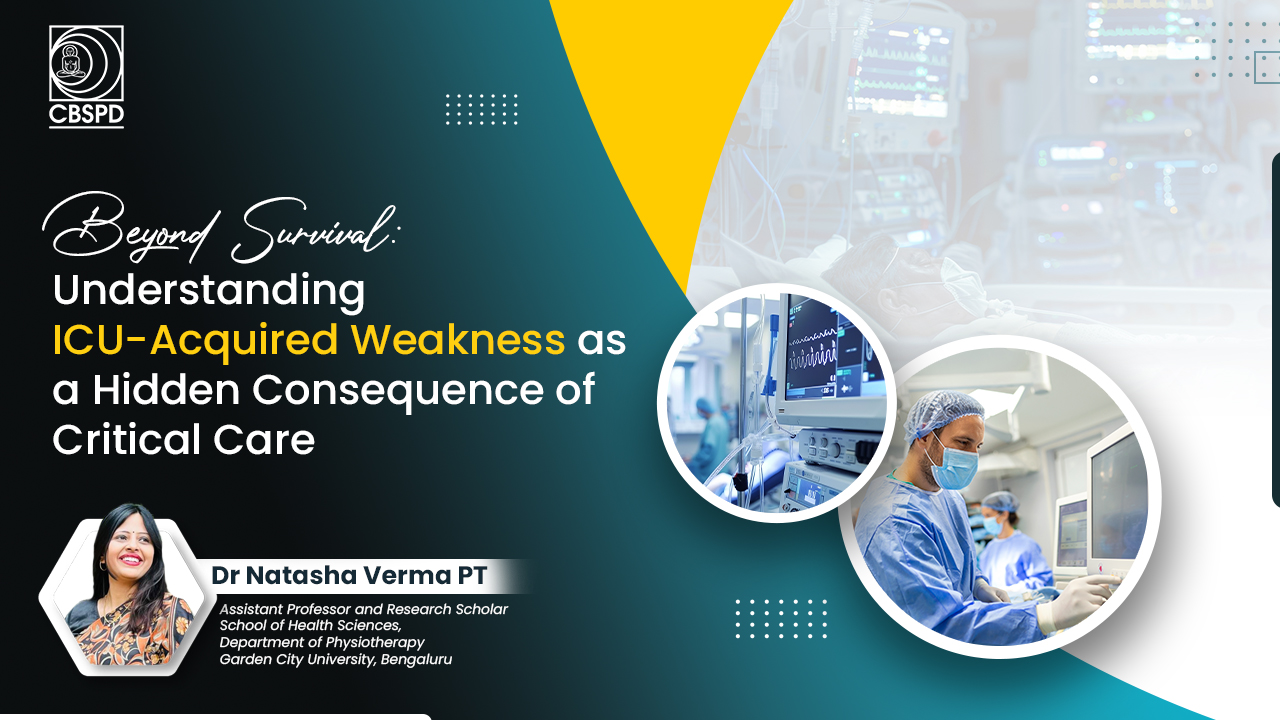
Beyond Survival: Understanding ICU-Acquired Weakness as a Hidden Consequence of Critical Care

Dr Natasha Verma
Assistant Professor and
Research Scholar
School of Health
Sciences, Department of Physiotherapy, Garden City University, Bengaluru
Introduction
Modern
intensive care medicine has transformed survival outcomes for critically ill
patients. Advances in mechanical ventilation, vasopressor support, renal
replacement therapy, and sophisticated monitoring systems have made it possible
to rescue individuals from life-threatening conditions such as sepsis,
multi-organ failure, and severe respiratory distress. However, this success has
also revealed an important clinical challenge: many survivors of critical
illness leave the Intensive Care Unit (ICU) with profound and unexplained
physical weakness.
This
condition is known as Intensive Care Unit-Acquired Weakness (ICU-AW). It is not
merely generalized fatigue or deconditioning due to bed rest, but a serious
neuromuscular disorder characterized by diffuse, symmetrical muscle weakness
involving both the upper and lower limbs. ICU-AW significantly affects
functional recovery, prolongs rehabilitation, and is a major contributor to
long-term disability in survivors of critical illness. It is now recognized as
a key component of Post-Intensive Care Syndrome (PICS).
Understanding
ICU-Acquired Weakness
The
condition primarily affects skeletal muscles and peripheral nerves, leading to
reduced strength, impaired mobility, and difficulty in performing even basic
functional activities such as sitting, standing, or walking. Importantly,
ICU-AW can develop within days of ICU admission, highlighting how rapidly
muscle and nerve deterioration can occur in critically ill patients.
ICU-AW
is broadly categorized into three overlapping conditions:
Types of
ICU-Acquired Weakness
1.
Critical Illness Polyneuropathy (CIP)
Critical
Illness Polyneuropathy is a disorder affecting peripheral nerves, particularly
motor and sensory axons. It is primarily caused by microvascular dysfunction
and inflammation, which lead to impaired nerve perfusion and subsequent axonal
degeneration. Patients with CIP typically present with symmetrical limb
weakness, reduced or absent deep tendon reflexes, and sensory impairment. The
condition is most prominent in the lower limbs and significantly affects
mobility and coordination.
2.
Critical Illness Myopathy (CIM)
Critical
Illness Myopathy involves direct dysfunction of skeletal muscle fibers. Unlike
simple disuse atrophy, CIM is characterized by structural damage within the
muscle itself, including loss of myosin filaments and disruption of contractile
proteins. This leads to severe muscle weakness despite intact nerve function.
Patients retain normal sensory perception, but experience profound difficulty
generating voluntary muscle force.
3.
Critical Illness Neuromyopathy (CINM)
In
clinical practice, most patients present with a combination of both nerve and
muscle involvement, referred to as Critical Illness Neuromyopathy. This mixed
form represents the most severe manifestation of ICU-AW and results in
prolonged functional impairment, delayed recovery, and significant
rehabilitation challenges.
Pathophysiology:
Why ICU-AW Develops
ICU-AW
is the result of a complex interaction between systemic inflammation, metabolic
dysfunction, immobility, and treatment-related factors. Critical illness
creates a metabolic environment that accelerates muscle breakdown and nerve
injury.
1.
Systemic Inflammation and Sepsis
Sepsis
is one of the strongest risk factors for ICU-AW. During severe infection, the
body releases large amounts of inflammatory cytokines such as TNF-α, IL-1, and
IL-6. These inflammatory mediators damage blood vessel walls, disrupt
microcirculation, and reduce oxygen delivery to muscles and nerves. As a
result, tissues experience hypoxia and cellular injury, leading to progressive
weakness.
2. Mitochondrial
Dysfunction
Mitochondria,
responsible for energy production, are significantly impaired during critical
illness. Inflammatory stress and oxidative damage reduce ATP production, which
is essential for muscle contraction and nerve conduction. Without sufficient
energy, muscle fibers cannot maintain normal function and gradually
deteriorate.
3.
Hyperglycemia and Metabolic Disturbance
Stress-induced
hyperglycemia is common in ICU patients. Elevated blood glucose levels are
toxic to peripheral nerves and contribute to axonal injury. Additionally,
insulin resistance prevents proper glucose uptake in muscles, promoting a
catabolic state where the body breaks down protein stores for energy, further
worsening muscle wasting.
4.
Immobility
Prolonged
bed rest is one of the most important contributors to ICU-AW. Within a short
period of complete immobility, skeletal muscles begin to atrophy rapidly. Lack
of mechanical loading reduces protein synthesis and accelerates muscle
breakdown. Even respiratory muscles, especially the diaphragm, weaken
significantly in mechanically ventilated patients.
5.
Medical Interventions
Certain
life-saving interventions may unintentionally contribute to ICU-AW:
· Mechanical
ventilation: Prolonged ventilation leads to
ventilator-induced diaphragmatic dysfunction (VIDD), where the diaphragm
weakens due to inactivity.
· Corticosteroids: High-dose
steroids may accelerate muscle protein breakdown.
· Neuromuscular
blocking agents: These medications can contribute to muscle
and nerve dysfunction when used for extended periods.
Clinical
Consequences of ICU-AW
ICU-AW
has far-reaching consequences that extend well beyond hospital discharge.
1.
Difficulty in Weaning from Ventilation
Weak
respiratory muscles make it difficult for patients to breathe independently,
prolonging dependence on mechanical ventilation and increasing the risk of
complications such as infections and tracheostomy.
2.
Severe Functional Impairment
Patients
often experience profound weakness that limits basic movements such as turning
in bed, sitting, standing, or walking. This leads to complete or partial
dependence on caregivers.
3.
Prolonged ICU and Hospital Stay
Due to
delayed recovery, patients with ICU-AW often require extended ICU care and
longer hospital admissions, increasing healthcare costs and resource
utilization.
4.
Long-Term Disability
Many
survivors continue to experience muscle weakness, fatigue, and reduced exercise
capacity for months or even years after discharge. Some never regain full
pre-illness functional status, resulting in permanent disability and reduced
quality of life.
5.
Psychological Impact
Loss of
independence, prolonged hospitalization, and physical limitations often lead to
anxiety, depression, and post-traumatic stress disorder (PTSD) in ICU
survivors.
Physiotherapy
Management of ICU-Acquired Weakness (ICU-AW): A Comprehensive Rehabilitation
Approach
1. Early
Mobilisation: The Cornerstone of ICU Physiotherapy
Early
mobilisation is the most effective and evidence-based intervention in the
prevention and management of ICU-AW. It aims to counteract the rapid effects of
bed rest on skeletal muscles, respiratory function, and cardiovascular
endurance. Physiotherapists assess patient readiness daily and implement a
graded mobility program that progresses from passive movement to full
ambulation as the patient improves.
In the
early stages, when patients are sedated or unconscious, passive range
of motion (PROM) exercises are performed to maintain joint
flexibility, prevent contractures, and stimulate blood circulation. These
movements also provide sensory input to the neuromuscular system, which helps
reduce the severity of muscle atrophy.
As the
patient becomes more alert and stable, active-assisted and active
exercises are introduced. These exercises encourage voluntary muscle
activation, improve neuromuscular control, and help initiate the recovery of
muscle strength. Physiotherapists focus on major muscle groups, particularly in
the upper and lower limbs, to preserve functional capacity.
Neuromuscular
electrical stimulation (NMES) is another important modality used in early
ICU rehabilitation. NMES delivers electrical impulses to stimulate muscle
contractions in patients who are unable to perform voluntary movements. This
helps reduce muscle wasting, improves local blood flow, and maintains muscle
protein synthesis during periods of immobility.
Progression
continues with functional mobility training, which includes sitting
at the edge of the bed, improving postural control, and enhancing trunk
stability. Once the patient demonstrates adequate strength and cardiovascular
stability, standing training and transfer activities are
initiated. This stage is crucial for restoring weight-bearing ability and
preparing the patient for ambulation.
In the
final phase of ICU rehabilitation, selected patients are guided through assisted
walking or ambulation, even while receiving ventilatory support if
necessary. This advanced level of mobilisation significantly improves
functional outcomes, reduces ICU stay, and enhances long-term recovery.
2.
Respiratory Physiotherapy and Muscle Training
Respiratory
complications are common in ICU patients due to mechanical ventilation,
sedation, and weakened respiratory muscles. Physiotherapy plays a critical role
in maintaining and restoring respiratory function.
One of
the key components is breathing exercises, which help improve lung
expansion, enhance ventilation, and reduce the work of breathing. Techniques
such as diaphragmatic breathing encourage better diaphragm activation, while
controlled breathing patterns improve oxygenation and reduce dyspnea.
Inspiratory
muscle training (IMT) is particularly important in patients who are
difficult to wean from mechanical ventilation. IMT uses resistance-based
breathing exercises to strengthen the diaphragm and accessory respiratory
muscles. Strengthening these muscles improves ventilatory efficiency, reduces the
duration of mechanical ventilation, and decreases the risk of ventilator
dependence.
In
addition, physiotherapists monitor and support airway clearance
techniques when required, especially in patients with excessive
secretions. Techniques such as positioning, suctioning support, and assisted
coughing help maintain airway patency and prevent respiratory infections.
Respiratory
physiotherapy not only improves lung function but also contributes to overall
physical recovery by enhancing oxygen delivery to peripheral muscles and
supporting early mobilisation efforts.
3.
Positioning and Contracture Prevention
Proper
positioning is essential in preventing secondary complications of ICU-AW.
Prolonged immobilization can lead to joint stiffness, pressure ulcers, and
muscle shortening.
Physiotherapists
ensure optimal limb positioning using pillows, splints, and regular
repositioning schedules. This helps maintain muscle length, prevent
deformities, and reduce discomfort. Early joint mobilization is also emphasized
to preserve range of motion and maintain musculoskeletal integrity.
Conclusion
ICU-Acquired
Weakness represents a significant and often underestimated consequence of
modern critical care. While advances in ICU medicine have dramatically improved
survival rates, they have also increased the number of patients living with
severe post-critical illness disability. ICU-AW highlights the importance of
not only saving lives but also preserving function and quality of life.
Early
recognition, prevention strategies, and timely rehabilitation—particularly
physiotherapy-led early mobilization—are essential in reducing the impact of
this condition. A shift from a purely survival-focused model to a survival-with-function
approach is crucial in modern intensive care practice. Ultimately, the
goal is not only to help patients survive critical illness but to ensure they
regain the strength and independence needed to return to meaningful life after
the ICU.
In this
regard, several physiotherapy books such as ‘Exercise Therapy’ offer
ample information on rehabilitation particularly surrounding the active,
passive and resisted exercises, the assessment of neuromuscular efficiency, and
the range of motion.
From the
Desk of CBS Publishers and Distributors
This
book is now available for purchase on our website www.cbspd.com It is also widely available
across the country with all the CBS dealers and on e-commerce portals
like Amazon. For any further information/queries
about the book, we are happy to assist you via call/WhatsApp on 9599779677.