.png)
.png)




.png)
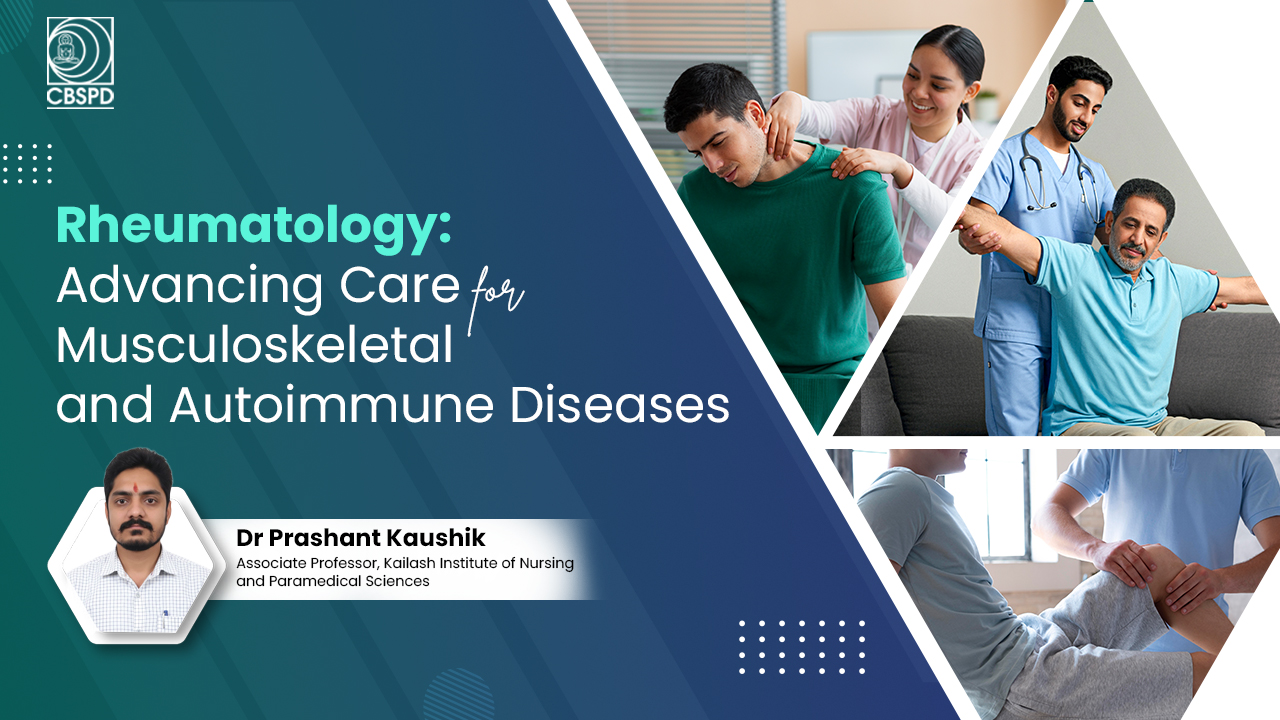
Rheumatology: Advancing Care for Musculoskeletal and Autoimmune Diseases

Dr. Prashant Kaushik, BPT, MPT (Sports), PhD, Associate Professor, Kailash Institute of Nursing and Paramedical Sciences
Rheumatology is a specialized branch of medicine that focuses on the prognosis, treatment, and prevention of illnesses affecting the joints, muscles, tissues, bones, and connective tissues. It also includes a huge range of autoimmune and inflammatory disorders wherein the frame's immune system mistakenly assaults its own tissues. Over the last few years, rheumatology has emerged as one of the most dynamic fields in medicine, with sizeable advances in diagnostics, therapeutics, and patient care.
Musculoskeletal problems represent one of the leading reasons of incapacity worldwide. A lot of literature on these conditions exists scattered. However, ‘Textbook of Orthopedic Physiotherapy’, a comprehensive textbook authored by Dr PS Kapoor, is dedicated to he role of Physiotherapy in Orthopedic cases, and elaborates upon all these rheumatic conditions, empowering the physiotherapists with a streamlined approach to the management of the orthopedic trauma and elective orthopedic cases encountered in their day-to-day practice.
Conditions like rheumatoid arthritis, osteoarthritis, systemic lupus erythematosus, ankylosing spondylitis, gout, and vasculitis can severely affect a person's quality of life, mobility, and productivity and are detailed in this book, making it a valuable resource for physiotherapists who play an important role in managing these conditions and implementing powerful treatment strategies to prevent long-term aches. Separate chapters on infective, endocrinal and degenerative diseases of the bones and joints are for sure a bonus!
Rheumatoid Arthritis (RA)
One of the most common conditions encountered in rheumatology is rheumatoid arthritis (RA), a persistent autoimmune disease characterized by inflammation of the joints. If left untreated, RA can lead to joint destruction, deformities, and practical impairment. Early prognosis and well-timed initiation of treatment have converted the prognosis of RA. Cutting-edge disorder-editing antirheumatic drugs (DMARDs) and biologic healing procedures have significantly reduced disease incidence and improved the affected individuals’ outcomes.
Osteoarthritis (OA)
Osteoarthritis, the second most important rheumatologic condition, is often a degenerative joint disorder associated with ageing, weight problems, and joint damage. It usually affects the knees, hips, palms, and spine. Even though osteoarthritis isn't an autoimmune disorder, it remains a main cause of chronic aches and incapacity. Control focuses on lifestyle modifications, physical therapy, weight control, pain management, and, in advanced cases, surgical intervention.
Systemic Lupus Erythematosus (SLE)
Systemic lupus erythematosus (SLE), typically called Lupus, is a complex autoimmune disease that may affect a couple of organs, such as the skin, kidneys, lungs, heart, and the nervous system. Its clinical presentation varies broadly, making its diagnosis difficult. Rheumatologists work intently with different professionals to offer comprehensive care and screen for disease risk. Advances in immunology have contributed to the improvement of targeted therapies that offer new hope for patients with lupus. Ankylosing spondylitis and associated spondyloarthropathies frequently affect the backbone and the sacroiliac joints, leading to persistent lower back pain and stiffness. These conditions often start in early adulthood and might result in a difficulty of spinal mobility if not treated correctly. The advent of biologic therapies concentrated on specific inflammatory pathways has revolutionized the control of those problems, allowing many patients to lead an active and productive lifestyle.
Gout
Gout is another vital rheumatologic disorder resulting from the deposition of uric acid crystals within the joints. Historically regarded as a disorder of affluence, gout is now diagnosed as a common metabolic disorder associated with obesity, hypertension, diabetes, and kidney disease. Effective control consists of dietary modifications, manipulation of serum uric acid levels, and treatment of acute inflammatory attacks.
Advancements in Rheumatology
The field of rheumatology has witnessed incredible clinical progress because of advances in immunology, genetics, and molecular biology. Researchers have gained a deeper know-how of the mechanisms underlying autoimmune illnesses, leading to an improvement in remedies and therapies of arthritis. Biologic drugs and small-molecule inhibitors can selectively block particular components of the immune system responsible for irritation. These treatments have improved the lives of countless sufferers by reducing symptoms, preventing organ damage, and improving long-term outcomes.
Early analysis remains a cornerstone of successful rheumatologic care. Many autoimmune illnesses present with nonspecific signs such as fatigue, joint pain, fever, and muscle weakness that could postpone the diagnosis.
Advances in laboratory technology, imaging techniques, and biomarker studies have led to a better diagnostic accuracy. Ultrasonography and magnetic resonance imaging (MRI) permit clinicians to locate the inflammation and carry out structural modifications in advance degrees, impossible with conventional methods.
The Role of Patient Schooling in Rheumatologic Cases
The affected person’s schooling is a fundamental aspect of rheumatology practice. Continual rheumatic diseases regularly require lifelong control and active patient participation. Training empowers people to understand their circumstances, adhere to treatment plans, apprehend the caution symptoms, and undertake a healthy way of life. Normal workout, balanced vitamins, smoking cessation, stress management, and good sleep can contribute to disease management.
The Role of Multidisciplinary Care in Rheumatology
Multidisciplinary care has always been important in rheumatology. Effective management regularly involves collaboration among rheumatologists, primary care physicians, physiotherapists, occupational therapists, nurses, psychologists, and other experts. This group-based technique addresses not only the physical manifestations of the ailment but also the mental and social situations faced by the sufferers.
Despite widespread progress, challenges continue to remain in this field. Behind-schedule analysis, restricted access to specialist care, excessive treatment charges, and disparities in healthcare provisions continue to affect patient outcomes in many areas. Ongoing studies and healthcare policy formation are critical to ensure equitable access to superior treatment plans.
The Future of Rheumatology
The future of rheumatology is promising. Precision medication, artificial intelligence, genomic research, and novel therapeutic agents are predicted to enhance prognosis and treatment. Customized therapies based on genetic and molecular profiles may also permit clinicians to select the therapies for individual patients while minimizing detrimental results.
In the end, rheumatology is a rapidly evolving clinical specialty that plays a crucial role in enhancing the lives of individuals affected by musculoskeletal and autoimmune illnesses. Through early analysis, innovative remedies, patient-centered care, and continual research studies, rheumatology continues to strengthen the prevention, control, and the knowledge of complex inflammatory problems.
As clinical discoveries amplify our expertise in the immune system, the field is poised for further development in health, mobility, and quality of life for sufferers globally.
From the Desk of CBS Publishers and Distributors
This book is now available for purchase on our website www.cbspd.com It is also widely available across the country with all the CBS dealers and on e-commerce portals like Amazon. For any further information/queries about the book, we are happy to assist you via call/WhatsApp on 9599779677.