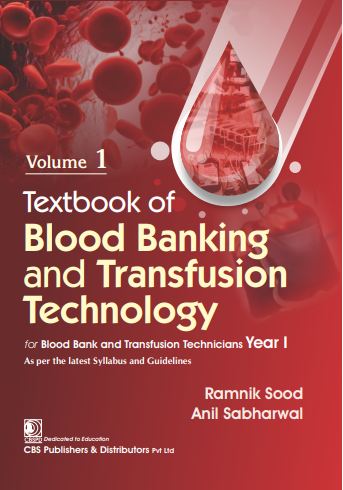
The chapters in this first volume have taken the reader from the basic structure and function of the human
body to the microscopic details of blood cells, their disorders and core hematology procedures. For a blood
bank technician, this knowledge shapes every decision about sample integrity, result reliability and the
interpretation of laboratory findings that influence transfusion choices.
As training progresses, readers will notice that these principles recur in many situations. Understanding
erythropoiesis clarifies why some donors should be deferred; recognizing hemolysis helps in investigating
transfusion reactions; knowing coagulation pathways makes PT/INR results meaningful when plasma or
cryoprecipitate is prescribed. Referring to these pages during practical postings will reinforce that connection
between basic science and safe transfusion practice.
Volume 1 is best viewed as a foundation. New guidelines, instruments and reagents will continue to evolve,
but careful history taking, meticulous sample collection, correct use of anticoagulants, proper smear
preparation and thoughtful interpretation will remain the bedrock of every technician. The second volume
will carry this foundation into the blood bank itself—into donor chairs, processing rooms, refrigerators,
quality records and, ultimately, the bedside of the patient who receives the blood that has been so carefully handled.

.png)
.png)