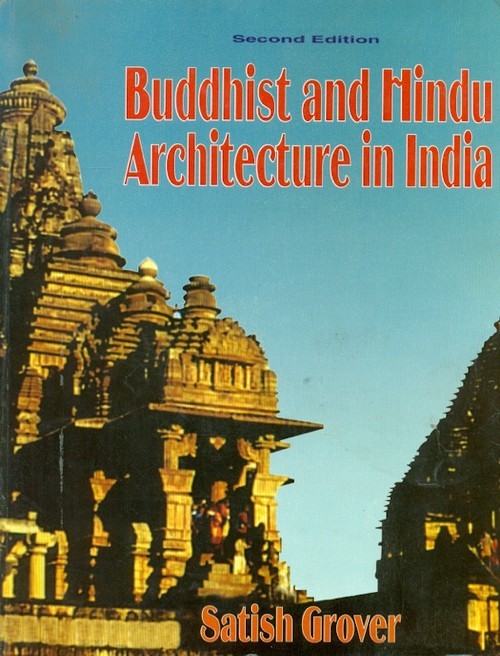
The book is intended to provide sufficient reading for the student of architecture to be able to probe more detailed writings on the subject with sufficient confidence; to break down the cynicism of the practising modern Indian architect to the countrys architectural heritage and to arm the more inquisitively inclined tourist of India with sufficient background material to appreciate the essence of Indian architecture. To achieve the above it has been necessary to take some liberties from the classic way of writing a book on historical architecture. In this as far as possible In spite of the poor communication systems of the past every human action in one part of the world is somehow derived from another and interconnected with yet another. A study of history is meaningful only because it is so. The same principle is applicable to the history of architecture.
Satish Grover approaches Indian architecture from a distinctive perspective shaped by his training as an architect. His focus is on architectural form, structure, and construction techniques, while situating monuments within the broader political and social history of India, geophysical conditions, environmental factors, and relevant geomantic theories from architectural texts. Across twenty-two clearly written chapters, he presents a comprehensive panorama of Indian architecture—from the Indus Valley Civilization to the Nayaka builders of Madurai and Rameswaram.
The chief strength of the work lies in its analysis of ancient and medieval architecture in relation to rural and urban development, available materials, and the philosophical foundations of Buddhist and Hindu thought that influenced building traditions. Each chapter is supported by photographs, with particular value added by detailed ground and elevation plans interpreted in architectural rather than purely archaeological terms.
This interdisciplinary study represents a sincere effort by modern architects to understand India’s architectural heritage in contemporary terms and highlights the need for greater collaboration between archaeologists, Sanskrit scholars, and architects.
— Kapila Vatsayan, The Book Review (Jan–Feb 1980)

.png)
.png)